AT_abc398_d [ABC398D] Bonfire
Description
There is an infinitely large two-dimensional grid, with a campfire at coordinate $ (0,0) $ .
At time $ t=0 $ , smoke exists only at cell $ (0,0) $ .
You are given a length- $ N $ string $ S $ consisting of `N`, `W`, `S`, `E`. At times $ t=1,2,\dots,N $ , the following happen in order:
- Wind blows, and all the smoke present at that time moves as follows:
- If the $ t $ -th character of $ S $ is `N`, smoke in cell $ (r,c) $ moves to cell $ (r-1,c) $ .
- If it is `W`, smoke in cell $ (r,c) $ moves to cell $ (r,c-1) $ .
- If it is `S`, smoke in cell $ (r,c) $ moves to cell $ (r+1,c) $ .
- If it is `E`, smoke in cell $ (r,c) $ moves to cell $ (r,c+1) $ .
- If there is no smoke in cell $ (0,0) $ , new smoke is generated at cell $ (0,0) $ .
Takahashi is standing at cell $ (R,C) $ .
For each integer $ 1 \le t \le N $ , determine if smoke exists at cell $ (R,C) $ at time $ t+0.5 $ , and print the response according to the required format.
Input Format
The input is given from Standard Input in the following format:
> $ N $ $ R $ $ C $ $ S $
Output Format
Print an $ N $ -character string consisting of `0` and `1`.
The $ t $ -th character ( $ 1 \le t \le N $ ) should be:
- `1` if smoke exists at cell $ (R,C) $ at time $ t+0.5 $ , and
- `0` otherwise.
Explanation/Hint
### Sample Explanation 1
At times $ 1.5,2.5,4.5,6.5 $ , there is no smoke at cell $ (-2,1) $ . At times $ 3.5,5.5 $ , there is smoke at cell $ (-2,1) $ .
Hence, output `001010`.
In the figures below, taking cell $ (0,0) $ with the campfire as a reference, cell $ (r,c) $ is drawn:
- $ -r $ cells up if $ r < 0 $ ,
- $ r $ cells down if $ r \ge 0 $ ,
- $ -c $ cells left if $ c < 0 $ ,
- $ c $ cells right if $ c \ge 0 $ .
The grid at time $ 0.5 $ looks like:
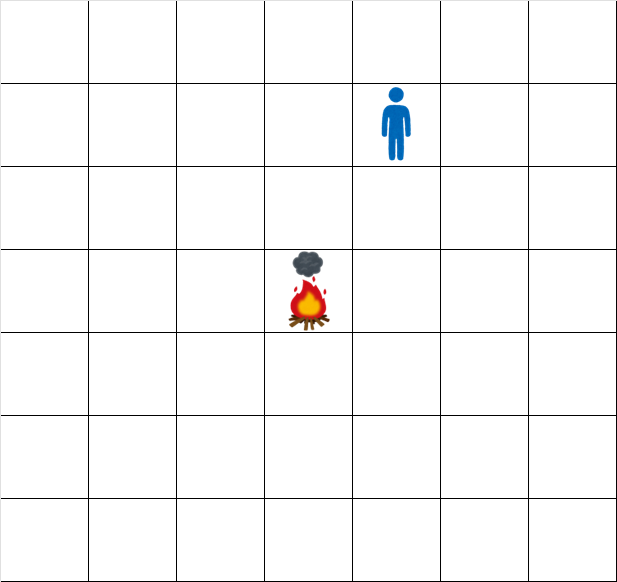
The grid at time $ 1.5 $ looks like:
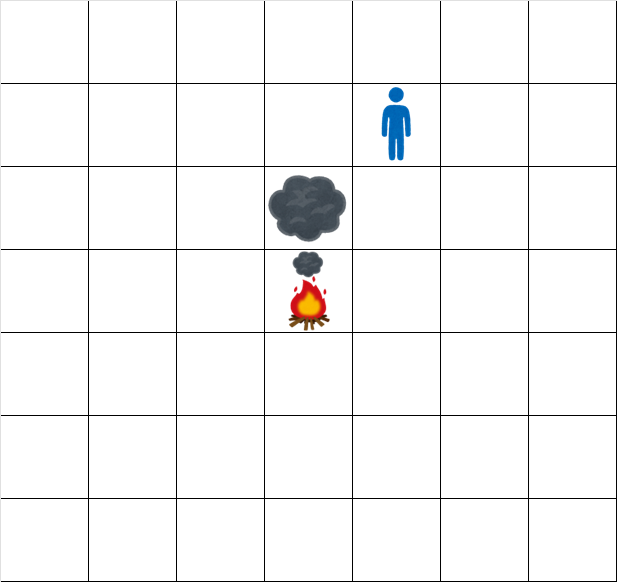
The grid at time $ 2.5 $ looks like:
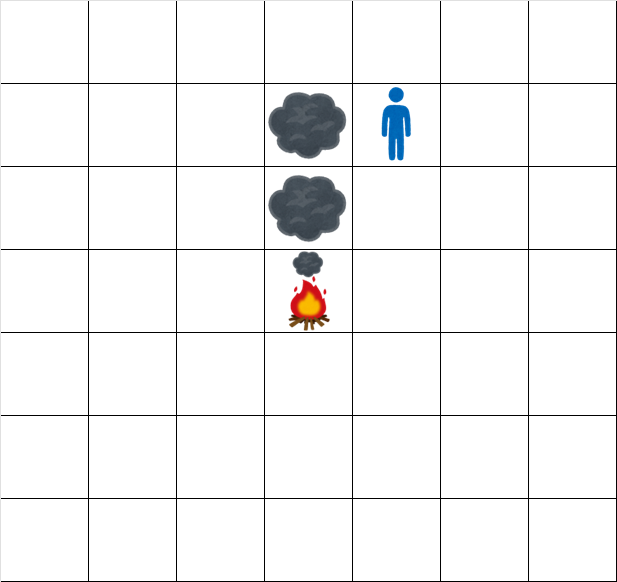
The grid at time $ 3.5 $ looks like:
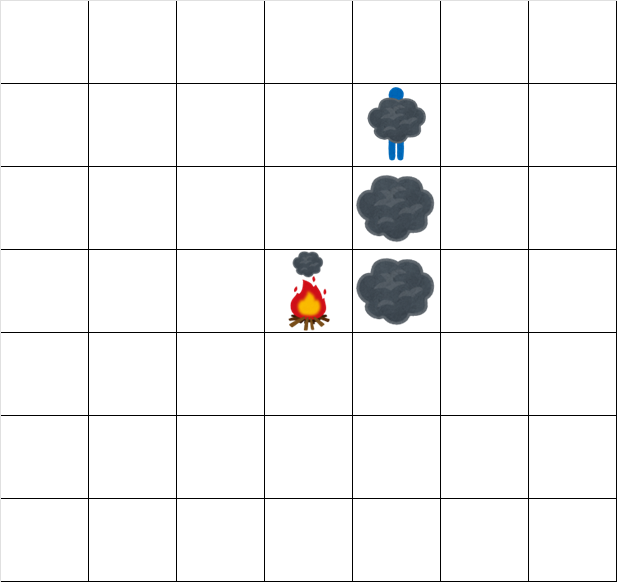
The grid at time $ 4.5 $ looks like:
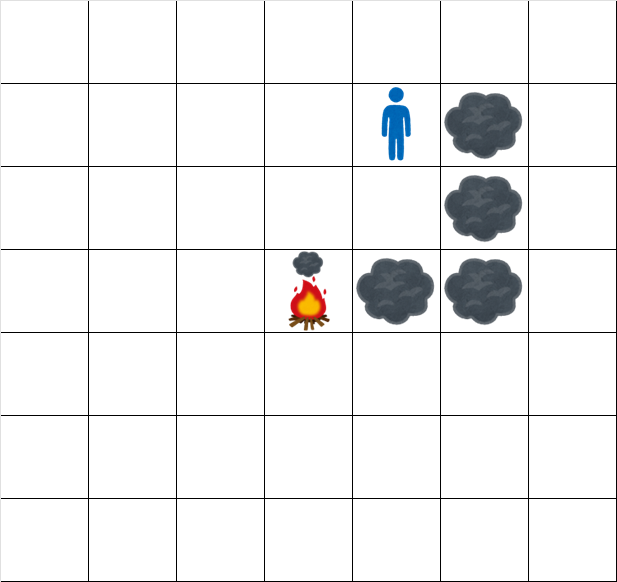
The grid at time $ 5.5 $ looks like:
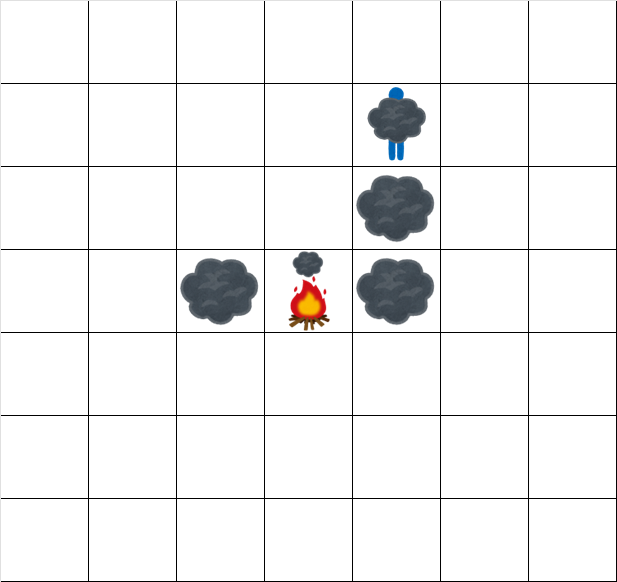
The grid at time $ 6.5 $ looks like:
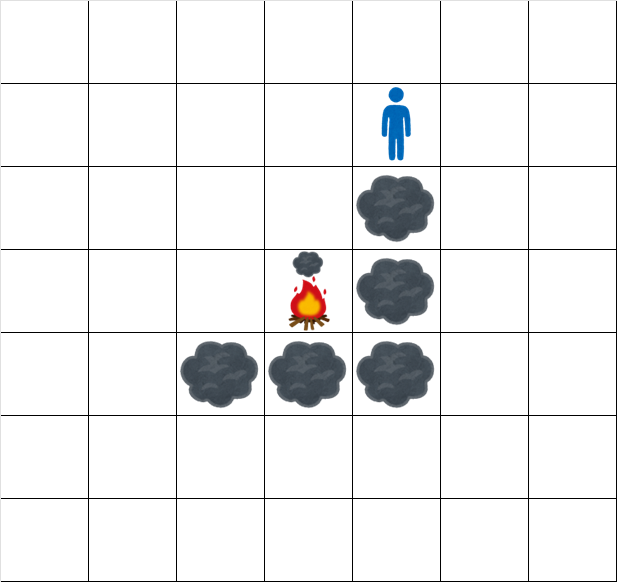
### Constraints
- $ N $ is an integer between $ 1 $ and $ 200000 $ , inclusive.
- $ S $ is a length $ N $ string consisting of `N`, `W`, `S`, `E`.
- $ R $ and $ C $ are integers between $ -N $ and $ N $ , inclusive.
- $ (R,C) \neq (0,0) $