P13743 [NWERC 2024] Evolving Etymology
Description
Eelco has recently started to gain interest in the field that studies the origin of words: etymology.
He especially likes how words can evolve in many different ways:
pronunciation changes over time,
words are borrowed from different languages,
and the meaning of words can change based on culture.
Eelco is eager to attend the Networking With Etymologists: Revolutionary Conference for the first time ever.
To make a good first impression,
he is going to present a completely new method to make new words from existing words.
:::align{center}
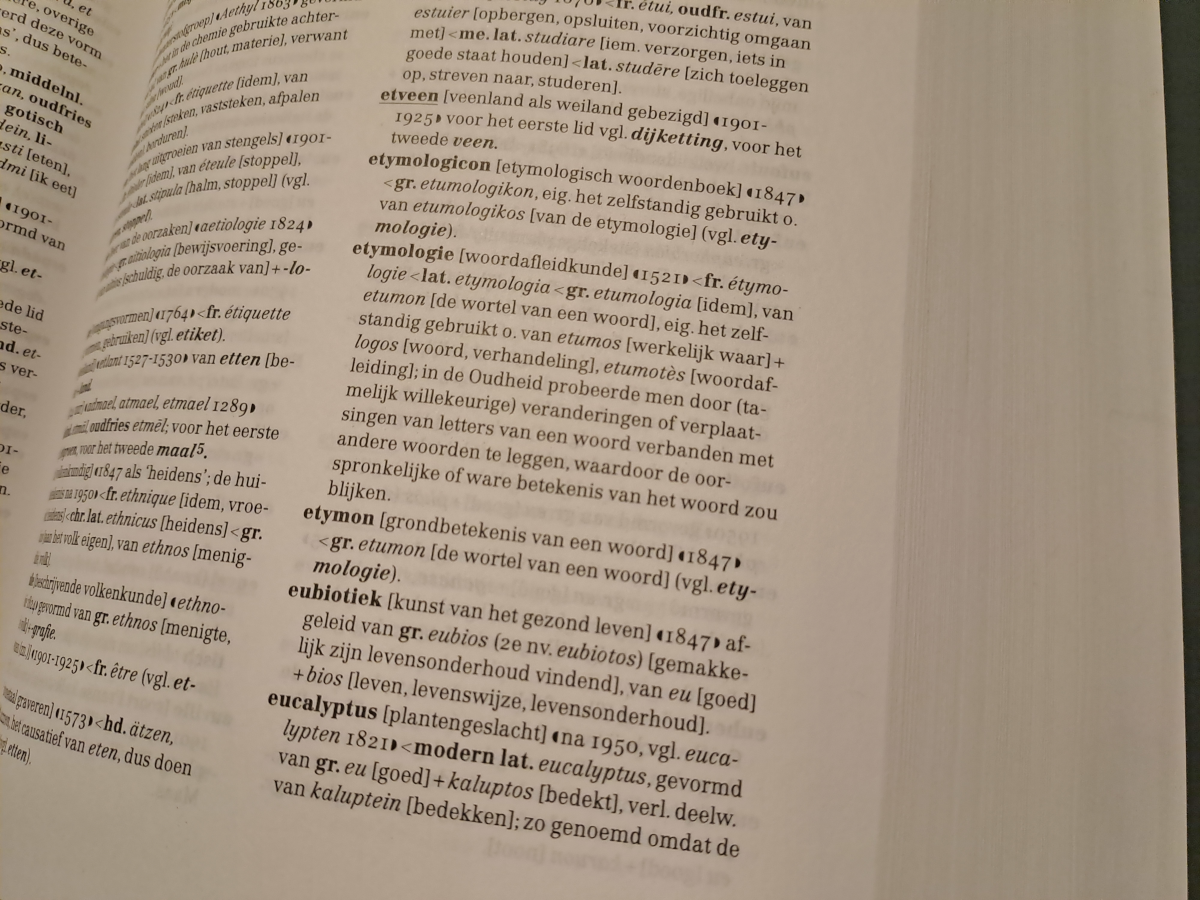
*Van Dale Groot etymologisch woordenboek.* © VanDale Uitgevers, used with permission
:::
To make a new word from an existing word $s$,
Eelco proposes to take every second letter of $s+s$,
starting with the first letter.
For example, applying this method to the word "$\texttt{etymology}$" would result in "$\texttt{eyooytmlg}$".
Of course, to design even more words, this process can be repeated many times.
Eelco would like to prepare a list of new words to present at the conference,
so he writes a program that applies his method some predetermined number of times.
Input Format
The input consists of:
- One line with two integers $n$ and $k$ ($1 \leq n \leq 10^5$, $1 \leq k \leq 10^{18}$), the length of the original word and the number of times to apply the method.
- One line with a string $s$ of length $n$, only consisting of English lowercase letters ($\texttt{a-z}$), the original word.
Output Format
Output the resulting word after applying the method to the original word $k$ times.