P16883 [GKS 2022 #D] Touchbar Typing
Description
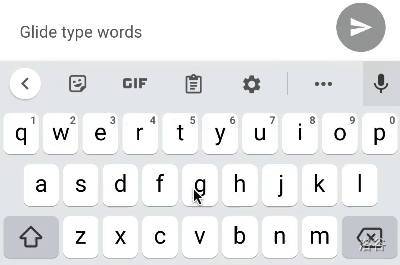
Glide Typing task in Crowdsource app uses a new Google keyboard to type a word by sliding a finger across keys without lifting the finger, as shown in the animation below.
:::align{center}
:::
To make the Glide Typing task more challenging, instead of a normal keyboard, we have a special linear keyboard $K$ that has all the keys in one row.
Imagine that you want to type a word $S$ that is $N$ characters long. The linear keyboard $K$ has $M$ keys. It is guaranteed that the keys cover all characters in $S$. However, some of the keys may be duplicates. In other words, for each character in $S$, there is one or more keys in $K$ mapped to the character. Note that, all characters and keys are represented as integers.
You may start with your finger on any key. It takes $1$ second to move your finger from a key to an adjacent key. Due to Glide Typing, there is no pressing of a key. If the finger is currently at the key $i$ which has character $K_i$, and we want to type the character $K_j$ at index $j$, we will glide the finger from the key $i$ to the key $j$, which takes $|j - i|$ seconds. If your finger is at key $x$, you can type character $K_x$ any number of times instantly. You need to type string $S$ character by character. Formally, you need to type $S_i$ before $S_{i+1}$ for each $1 \le i \le N - 1$.
For example, suppose the word $S$ has characters: $1, 2, 2, 3, 4$. You can start by keeping your finger on key with character $1$ on the keyboard which is at index $i$. Then you glide your finger to key which has character $2$ which is at index $j$. It would take $|j - i|$ seconds. In order to type character $2$ two times in string $S$, you can do that in no additional time as $|j - j| = 0$ seconds. Then you can continue to glide your finger to type the other characters in the word $S$ sequentially.
Can you calculate the minimal time needed to type the word?
Input Format
The first line of the input gives the number of test cases, $T$. $T$ test cases follow.
The first line of each test case contains one integer $N$: the length of the word $S$.
The second line of each test case contains $N$ integers: each $S_i$ is the character at the $i$-th index.
The third line of each test case contains one integer $M$: the length of the keyboard $K$.
The fourth line of each test case contains $M$ integers: each $K_i$ is the character at the $i$-th key.
Output Format
For each test case, output one line containing the minimal time needed to type the word. Case #$x$: $y$, where $x$ is the test case number starting from $1$ and $y$ is the minimal time needed to type $S$ on the keyboard $K$.
Explanation/Hint
In Sample Case #$1$, we can take the following steps to type string $S$ in minimum time.
- Start by keeping your finger on key $K_1$ which has character $1$. We have now typed the first character of the string $S$.
- In order to type the second character $2$ of the string $S$, glide your finger to key $K_2$. It takes $|2 - 1| = 1$ additional second to glide the finger from index $1$ to index $2$.
- In order to type the third character $3$ of the string $S$, glide your finger to key $K_3$. It takes $|3 - 2| = 1$ additional second to glide the finger from index $2$ to index $3$.
- In order to type the fourth character $2$ of the string $S$, glide your finger to key $K_2$. It takes $|2 - 3| = 1$ additional second to glide the finger from index $3$ to index $2$.
- In order to type the fifth character $1$ of the string $S$, glide your finger to key $K_1$. It takes $|1 - 2| = 1$ additional second to glide the finger from index $2$ to index $1$.
- We have typed all characters of the string $S$ in a total of $4$ seconds.
In Sample Case #$2$, we can take the following steps to type string $S$ in minimum time.
- Start by keeping your finger on key $K_2$ which has character $1$. We have now typed the first character of the string $S$.
- As our finger is on key $K_2$, we can type the character $1$ any number of times, without any additional time. Hence, we can type the second and third characters of the string $S$.
- We have typed all characters of the string $S$ in a total of $0$ seconds.
### Limits
$1 \le T \le 100$.
All characters in $S$ appears at least once in $K$.
$1 \le K_i \le 2500$.
$1 \le S_i \le 2500$.
**Test Set $1$**
$1 \le N \le 100$.
$1 \le M \le 100$.
It is guaranteed that there are no duplicated keys in keyboard $K$.
**Test Set $2$**
$1 \le N \le 100$.
$1 \le M \le 100$.
**Test Set $3$**
$1 \le N \le 2500$.
$1 \le M \le 2500$.