P9772 [HUSTFC 2023] Grid Coloring.
Description
There is a grid consisting of $n\times n$ small squares, where the side length of each small square is $1$. Walk Alone and Kelin play a coloring game on it. The rules are as follows:
- Walk Alone and Kelin take turns to operate, and Walk Alone moves first.
- When it is Walk Alone's turn, he chooses an uncolored square edge and colors it **red**. After the operation ends, if this edge is the last uncolored edge of one (or two) square(s), then that square (or those squares) is/are automatically colored **red** as well.
- When it is Kelin's turn, he chooses an uncolored square edge and colors it **blue**. After the operation ends, if this edge is the last uncolored edge of one (or two) square(s), then that square (or those squares) is/are automatically colored **blue** as well.
- When all edges are colored, the game ends. At this time, the player who has more squares colored in their own color wins; if the numbers are equal, the game ends in a draw.
For example, in a $2\times 2$ grid, one possible game process is as follows:
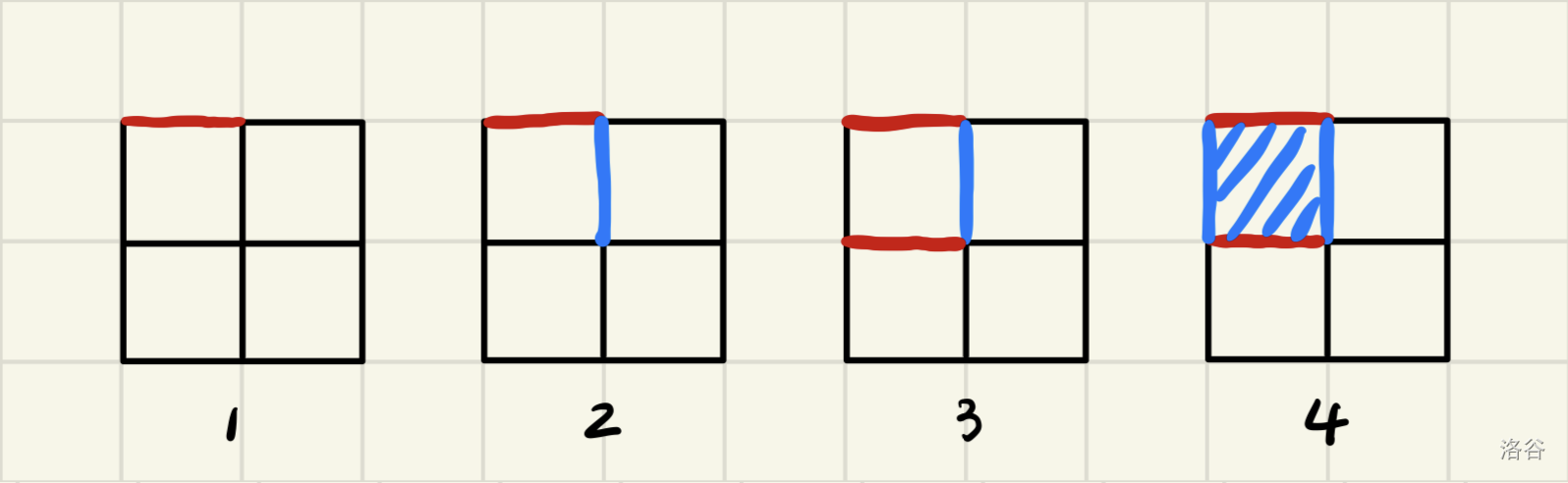
Given the grid side length $n$, if both players play actively (using optimal strategies, trying their best to win, or if they cannot win, trying their best to achieve a draw), determine who will win or whether the game will end in a draw.
Input Format
One line contains an integer $n\ (1\le n\le 10^9)$, representing the side length of the grid.
Output Format
If Walk Alone wins, output `Walk Alone`; otherwise, if Kelin wins, output `Kelin`; otherwise, output `Draw` for a draw.
Explanation/Hint
Translated by ChatGPT 5