SP25158 STARSBC - Star
Description
Fernando won a compass for his birthday, and now his favorite hobby is drawing stars: first, he marks **N** points on a circumference, dividing it into **N** equal arcs; then, he connects each point to the _k-th_ next point, until returning to the first point.
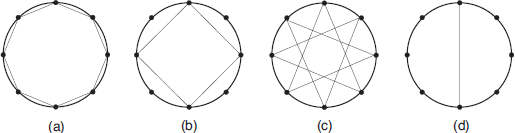
Depending on the value of _k_, Fernando may or may not reach all points marked on the circumference; when that happens, the star is called complete. For example, when **N** = 8, the possible stars are shown in the figure below. Stars (a) and (c) are complete, while stars (b) and (d) are not.

Depending on the value of **N**, it may be possible to draw many different stars; Fernando asked you to write a program that, given **N**, determines the number of complete stars he can draw.
Input Format
The input contains several test cases. Each test case contains a single line, containing a single integer **N** (3 N < 2 $ ^{31} $ ), indicating the number of arcs in which the circumference was divided.
Output Format
For each test case, your program must print a single line containing a single integer, indicating the number of complete stars that can be drawn.